Why breathing mechanics matter for deep sleep
By Dr. Nathalie Beauchamp, DC
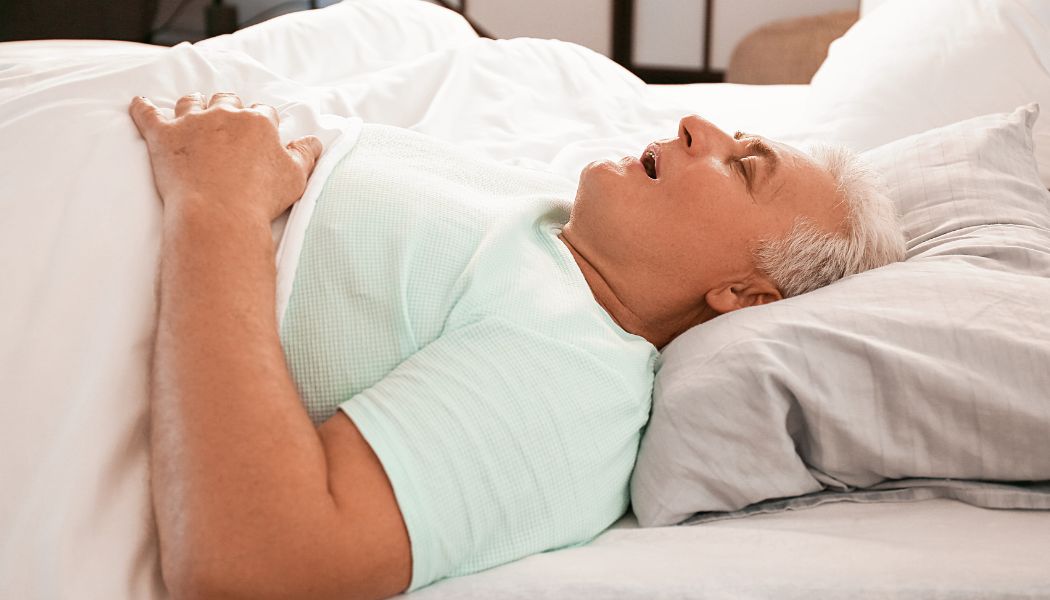
Mouth breathing, tongue posture, and sleep apnea interact to destabilize the airway during sleep.
Sleep is not simply about how long you rest. It is a complex, active biological process that depends on airway patency, breathing mechanics, spinal alignment, neuromuscular control, and metabolic health. (1) When these systems are compromised, sleep quality deteriorates—often in subtle ways that accumulate over months or years before any obvious symptoms appear.
One of the most underestimated contributors to poor sleep is chronic mouth breathing, frequently driven by modern posture habits, sedentary lifestyles, and dysfunctional breathing patterns. But there’s another factor that rarely gets discussed: where your tongue rests when you’re not thinking about it. For those with low tongue posture, this seemingly minor detail can influence airway diameter, head position, and even nervous system regulation—making it a lesser-known variable worth considering for anyone struggling with restless sleep, snoring, or unexplained fatigue. (2)
Over time, these factors can progress from snoring and restless sleep to clinically significant sleep-disordered breathing.
The downstream effects of dysfunctional breathing
When breathing mechanics are compromised, the effects ripple through multiple systems. The brain interprets restricted airflow as a threat, even if you aren’t fully waking up. This triggers low-grade sympathetic activation that persists through the night. Sleep becomes lighter and more fragmented as the nervous system repeatedly rouses itself to restore airflow. These micro-arousals may not register consciously, but they prevent the brain from cycling through the deeper stages of sleep where physical repair and cognitive restoration occur.
Hormonal rhythms suffer as a result. Cortisol, which should decline steadily through the night and reach its lowest point in the early morning hours, stays elevated. Growth hormone—released primarily during slow-wave sleep—gets blunted when those stages are cut short. Without adequate time in deep sleep, muscle recovery slows, tissue repair stalls, and the immune system loses ground.
The result is a state of chronic under-recovery that compounds night after night. You may be logging enough hours in bed, but the quality of that sleep isn’t delivering what your body needs. Over weeks and months, this deficit shows up as persistent fatigue, impaired focus, slower physical recovery, and increased susceptibility to illness and injury.
At the more severe end of this spectrum is Obstructive Sleep Apnea (OSA), a condition involving repeated partial or complete collapse of the upper airway during sleep. These events cause intermittent drops in oxygen levels, frequent micro-arousals, and chronic sympathetic activation. Large cohort studies link untreated OSA to increased cardiovascular disease, insulin resistance, cognitive decline, depression, and elevated all-cause mortality. (3)
Sleep apnea often develops gradually, preceded by years of habitual mouth breathing, snoring, reduced nasal airflow, poor tongue and jaw positioning, and decreased airway muscle tone. Even without a formal diagnosis, these factors can significantly impair sleep architecture and recovery.
Mouth breathing, oxygen delivery, and sleep quality
Breathing through the mouth alters respiratory physiology in ways that directly impair sleep, and matters more than most people realize. Nasal breathing does far more than simply move air—it conditions each breath before it reaches the lungs. The nasal passages filter out particulates and pathogens, warm the air to body temperature, and add moisture to protect the delicate lung tissue. Perhaps most importantly, the paranasal sinuses release nitric oxide during nasal breathing, a molecule that dilates blood vessels in the lungs and enhances oxygen uptake into the bloodstream.
Mouth breathing bypasses all of this. Air enters unconditioned, and nitric oxide production drops significantly. But the consequences don’t stop there.
Patrick McKeown, author of The Oxygen Advantage and The Breathing Cure, has written extensively on how chronic mouth breathing promotes over-breathing (hyperventilation). (4) While this might seem harmless or even beneficial, it creates a physiological problem. Over-breathing expels too much carbon dioxide, and carbon dioxide plays a critical role in oxygen delivery. Through a mechanism called the Bohr effect, hemoglobin releases oxygen to tissues more readily when carbon dioxide levels are adequate. When CO2 drops too low, hemoglobin holds onto oxygen more tightly, meaning less of it reaches the muscles, brain, and organs that need it.
The result during sleep is a body that’s technically breathing, but not efficiently oxygenating. Sleep becomes lighter and more fragmented, and time spent in the deep slow-wave and REM stages, where physical repair, memory consolidation, and hormonal regulation occur, gets cut short. Over time, this pattern erodes the body’s capacity to restore itself, turning what should be a recovery period into another source of physiological stress.
The role of tongue posture in airway stability
Most discussions of sleep-disordered breathing focus on the airway itself, but the tongue plays a central role in this equation, and where it rests has significant implications for whether the airway remains stable through the night.
During nasal breathing with the mouth closed, the tongue naturally positions itself against the hard palate—the roof of the mouth. The gentle upward pressure from the tongue helps maintain the width of the upper jaw and supports the structural integrity of the airway. It’s a feedback loop: proper tongue posture encourages nasal breathing, and nasal breathing reinforces proper tongue posture.
Habitual mouth breathing disrupts this relationship. When the jaw drops open, the tongue loses its contact with the palate and falls toward the floor of the mouth. This shifts the base of the tongue backward, narrowing the space behind it where air needs to pass. The genioglossus—the primary muscle responsible for holding the tongue forward—becomes underutilized in this position. Over time, it loses tone and responsiveness, making the airway less stable during sleep when muscle activity naturally decreases. (5)
What makes this particularly problematic is that the brain adapts to these patterns over time. The nervous system begins to treat low tongue posture as the default state, encoding these patterns into the motor system. Mouth breathing often starts as a response to something temporary—a child with chronic congestion learns to breathe through their mouth because their nose is blocked, or enlarged tonsils make nasal breathing difficult. The body adapts to get air in by whatever route works. But the nervous system doesn’t automatically reset once the obstruction clears. The original problem may be gone, but the pattern it created remains. (6)
The structural-postural link between breathing and sleep
Posture has a profound influence on airway size and stability. The tongue is anchored to the hyoid bone—a small, free-floating structure in the throat—which connects through fascia and muscle to the cervical spine, the deep front of the neck, the diaphragm, and structures that extend all the way into the pelvis. This continuity means that where the tongue rests influences head carriage, cervical curvature, breathing mechanics, and even core stability.
Forward head posture is one of the most common postural dysfunctions seen today, driven largely by how we live. Hours spent looking down at phones, hunching over laptops, and sitting for prolonged periods of time, create a sustained forward pull on the head and neck. Over time, the muscles at the front of the neck shorten, the muscles at the back become strained and overworked, and the head settles into a position anterior to the shoulders. This increases mechanical load on the cervical spine, compresses the upper airway, and can restrict blood flow through the neck.
Biomechanical research shows that forward head posture compromises airway patency, particularly during sleep when muscle tone decreases. (7) Thoracic spine stiffness and poor rib cage mobility further impair diaphragmatic breathing, promoting shallow, upper-chest respiration that increases sympathetic nervous system tone and disrupts sleep continuity.
The tongue, jaw, and hyoid are continuous with what many manual therapists call the deep front line—a proposed fascial chain running from the inner arch of the foot, up through the inner leg, pelvis, diaphragm, and into the throat and skull. This line functions as a core stabilizing system and works in relationship with the posterior chain to help maintain posture and stability. When dysfunction shows up in one area it often creates compensations that travel along this line.
Strength training, body composition, and impact on sleep quality
Excess body weight—and more specifically, fat distribution around the neck and trunk- is a major risk factor for sleep apnea. Weight loss has been shown to reduce apnea severity and improve oxygen saturation significantly. (8) However, weight alone does not explain why some lean individuals still struggle with sleep-disordered breathing.
Resistance and strength training play a critical role by:
- Preserving and building muscle mass
- Improving insulin sensitivity and metabolic health
- Reducing systemic inflammation
- Supporting posture and spinal stability
Strengthening the core and posterior chain—including glutes, spinal extensors, scapular stabilizers, and deep neck flexors—helps maintain upright posture, optimize rib cage mechanics, and support diaphragmatic breathing. Regular resistance training is also associated with improved sleep quality and increased slow-wave sleep. (9)
Strong muscles help the skeleton hold better posture, reducing airway strain and creating a more stable breathing environment during sleep.
Interestingly, research suggests that tongue position may also directly influence strength output. One study found that holding the tongue against the upper palate during muscle activity increased strength by approximately 30 per cent. (10) This effect likely relates to core stabilization and cranial nerve activation, suggesting that proper tongue posture isn’t just about sleep—it may enhance physical performance across the board.
CPAP therapy: effective tool within a broader strategy
Continuous Positive Airway Pressure (CPAP) therapy remains the gold standard treatment for moderate to severe obstructive sleep apnea. CPAP works by delivering pressurized air through a mask to keep the airway open during sleep, effectively reducing apneas, improving oxygenation, and lowering cardiovascular risk.
However, adherence remains a major challenge. Research consistently shows that nearly half of patients prescribed CPAP discontinue or underuse it within the first year. (11) Common barriers include discomfort, mask intolerance, dry mouth, nasal congestion, and claustrophobia.
More fundamentally, CPAP addresses the symptom—airway collapse—without correcting the underlying factors that allowed the airway to become unstable. For many patients, CPAP works best as one component within a broader strategy that also includes postural correction, breathing retraining, and attention to tongue position.
Oral appliances and jaw position
Dentists trained in sleep medicine can play a crucial role, particularly for patients with mild to moderate OSA or those intolerant to CPAP. Mandibular advancement devices (MADs) reposition the lower jaw forward during sleep, increasing airway space and reducing collapse.
Clinical trials show that oral appliances can significantly reduce apnea severity and snoring in appropriately selected patients. (12) Dentists also assess:
- Jaw structure and bite alignment
- Tongue posture
- Airway dimensions
- Bruxism and nighttime clenching
In many cases, dental appliances work best when combined with posture correction, breathing retraining, and weight optimization—reinforcing the idea that sleep apnea management should be phenotype-driven, not one-size-fits-all.
Retraining tongue posture and breathing patterns
The patterns behind poor tongue posture and dysfunctional breathing aren’t hardwired—they’re learned. And what’s been learned can be unlearned, though it takes consistent effort and attention. Myofunctional therapy, a structured approach using exercises that target the tongue, lips, and oropharyngeal muscles, has been shown to reduce snoring and decrease apnea severity in mild to moderate cases. (13) The goal isn’t just to strengthen these muscles, but to reprogram their resting state.
It starts with awareness. Most people have never given a moment’s thought to where their tongue sits when they’re not speaking or eating, or whether they’re breathing through their nose or mouth. Building conscious recognition throughout the day is the first step toward changing the habit.
For tongue posture, the target is a resting position where the tongue sits lightly against the hard palate, just behind the front teeth, but not pressing into them. The lips stay closed, the teeth rest slightly apart, and the tongue feels gently suctioned to the roof of the mouth. To find this position, make a “cluck” or “click” sound with your tongue—the spot where the tongue lands just before the click is roughly where it should rest. The suction should feel gentle and sustainable, not forced.
For breathing, the goal is nasal breathing with the mouth closed—during the day and, eventually, during sleep. This often requires building tolerance gradually. Many chronic mouth breathers find that their nose feels congested when they first try to switch, but nasal breathing tends to improve nasal airflow over time as the tissues adapt. Practicing slow, quiet nasal breaths throughout the day helps the nervous system accept this as the new default.
Swallowing habits matter too. Many people thrust the tongue forward against the teeth when swallowing—a pattern that reinforces low tongue posture dozens of times a day without them realizing it. Retraining the swallow to use a wave-like motion pressing up and back against the palate helps cement the correct resting position and supports the broader goal of keeping the tongue where it belongs.
Encouraging nasal breathing with mouth taping
Mouth taping has gained attention recently, and for good reason—it’s a simple, low-cost way to encourage nasal breathing during sleep by keeping the lips sealed so the body has no choice but to breathe through the nose.
The nasal cavities produce nitric oxide, a gas that dilates blood vessels and airways, and when you breathe through your nose, more of it reaches the lungs. This shifts the body toward a parasympathetic state, supporting the deep, restorative stages of sleep that mouth breathers often struggle to reach. Mouth breathing, by contrast, dries out the throat, promotes snoring, and tends to produce sleep that feels shallow even when it technically lasts long enough.
The technique itself couldn’t be simpler—a small piece of paper tape or micropore tape placed across lightly closed lips, either vertically or horizontally, depending on what feels comfortable. There’s no need to clamp down or force anything; the lips just need to stay gently together.
Most people need a few weeks to adjust. The tape might come off during the night, or you might rip it away half-asleep without any memory of doing so. This is normal and expected. After about three months of consistent use, nasal breathing at night tends to become automatic, at which point some people stop taping altogether while others continue because they’ve come to appreciate the results.
For anyone who finds the idea of sealed lips claustrophobic, wearing the tape during the day while going about ordinary activities helps normalize the sensation before using it at night. Products like MyoTape gently press the lips together without fully sealing them, which many people find more comfortable than a complete seal. One note on safety: only use tape designed for skin, never anything industrial or with harsh adhesive.
And be realistic about what taping can and cannot do. It keeps the mouth closed, which is genuinely valuable—especially for people who have already begun working on their breathing and tongue posture during waking hours. But taping alone doesn’t lift the tongue to the palate, and it doesn’t reverse years of postural compensation. It works best as overnight reinforcement for patterns being actively retrained during the day. Without that daytime foundation, taping addresses a symptom while leaving the underlying dysfunction untouched.
Chiropractic care and cervical curve restoration
As a chiropractor with almost 30 years in practice, I would be remiss not to discuss how cervical spine alignment influences the patterns described throughout this blog. A healthy cervical spine maintains a natural lordosis—a gentle forward curve that optimizes spinal loading, nerve function, and airway mechanics. Loss of this curve, often associated with chronic forward head posture, is linked to neck pain, headaches, and reduced respiratory efficiency. (14)
Chiropractic care can address spinal alignment through adjustments, mobilization, and targeted rehabilitation. Cervical extension traction techniques, including devices like Denneroll, apply sustained low-load traction designed to promote long-term structural remodelling rather than short-term symptom relief. Clinical studies show that cervical extension traction can improve cervical lordosis, reduce forward head posture, and decrease neck-related disability. (15)
By restoring cervical alignment, mechanical stress on the upper airway may be reduced, supporting more stable breathing during sleep. Upper cervical work may also influence autonomic balance by affecting proprioceptive input to the brainstem—consistent with the observation that many patients report improved sleep quality following chiropractic care.
When combined with corrective exercises and strength training, postural correction becomes a durable intervention rather than a temporary fix.
Sleep, longevity, and vitality
Sleep quality reflects how well the body functions as an integrated system. Posture, muscle strength, breathing mechanics, tongue position, spinal alignment, metabolic health, and nervous system regulation all converge at night, when the body repairs tissue, clears metabolic waste, consolidates memory, and restores hormonal balance.
From a longevity perspective:
- Strength training supports posture and airway stability
- Chiropractic care refines alignment and neuromuscular control
- Efficient breathing supports deeper, more restorative sleep
- High-quality sleep protects cognition, metabolism, and cardiovascular health
Addressing sleep apnea and poor sleep is not just about managing symptoms—it is about building a body that breathes, moves, and recovers efficiently for decades to come. When structure and function are aligned, sleep becomes one of the most powerful tools for vitality and long-term health.
Yours in health,
Dr. Nathalie
Dr. Nathalie Beauchamp, B.Sc., D.C., IFMCP is the author of the book—Hack Your Health Habits: Simple, Action-Driven, Natural Solutions For People On The Go, and the creator of several online health education programs. Dr. Nathalie’s mission is to educate, lead and empower people to take control of their health. She recently launched a new book https://smartcuts.life/For health strategies and biohacking tips sign up for her newsletter at www.drnathaliebeauchamp.com
Photo credit: ©Pixelshot via Canva.com
References
- How we sleep: From brain states to processes. Rev Neurol (Paris). 2023
- (2015). Myofunctional therapy to treat obstructive sleep apnea: A systematic review and meta-analysis. Sleep.
- Sleep apnea and cardiovascular disease: an American Heart Association/American College Of Cardiology Foundation Scientific Statement from the American Heart Association Council for High Blood Pressure Research Professional Education Committee, Council on Clinical Cardiology, Stroke Council, and Council On Cardiovascular Nursing. In collaboration with the National Heart, Lung, and Blood Institute National Center on Sleep Disorders Research (National Institutes of Health). Circulation. 2008
- McKeown, P. (2021). The breathing cure: Develop new breathing habits to restore your health, boost performance, and access your potential. Humanix Books.
- Tongue function: Treatment of obstructive sleep apnea. BioMed Research International, 2018, Article 2157974. https://doi.org/10.1155/2018/2157974
- Critical role of myofascial reeducation in pediatric sleep-disordered breathing. Sleep Med. 2013
- Effect of forward head posture on thoracic shape and respiratory function. J Phys Ther Sci. 2019
- Diet and exercise in the management of obstructive sleep apnoea and cardiovascular disease risk. Eur Respir Rev. 2017 Jun
- The effects of physical activity on sleep: A meta-analytic review. (2015) Journal of Behavioral Medicine.
- The acute effect of the tongue position in the mouth on knee isokinetic test performance: a highly surprising pilot study. Muscles Ligaments Tendons J. 2014
- Factors Affecting Long-Term Compliance of CPAP Treatment-A Single Centre Experience. J Clin Med. 2021
- Efficacy of mandibular advancement device in the treatment of obstructive sleep apnea syndrome: A randomized controlled crossover clinical trial. Med Oral Patol Oral Cir Bucal. 2015
- Myofunctional therapy to treat obstructive sleep apnea: A systematic review and meta-analysis. (2015) Sleep
- The Efficacy of Cervical Lordosis Rehabilitation for Nerve Root Function and Pain in Cervical Spondylotic Radiculopathy: A Randomized Trial with 2-Year Follow-Up. J Clin Med. 2022
- Restoring cervical lordosis by cervical extension traction methods in the treatment of cervical spine disorders: a systematic review of controlled trials. J Phys Ther Sci. 2021
- Sleep disordered breathing and mortality: Eighteen-year follow-up of the Wisconsin sleep cohort. (2008) Sleep