Carrot tops rich in vitamins and anticancer antioxidants
By Sari Huhtala
Harvesting carrots from the garden? Turn those super nutritious carrot tops into delicious pestos, sauces, dressings, and salad greens. With more than six times the vitamin C than the carrot itself, carrot leaves offer a burst of chlorophyll not found in the root, along with more calcium, potassium, iron and vitamin K than the carrot.
Scientists have found chlorophyll, the number one pigment in plants and algae, has antioxidant, antimicrobial and anticancer properties. A 2013 study in the journal Nutrients found carrot leaves are packed with phytochemicals – flavonoids, phenolic compounds, terpenoids, steroids, tannins, carotenoids, and beta‐carotene – which help lower inflammation, protect the body from cellular damage, and reduce the risk of disease.
Parsley, known as a superfood loaded with antioxidants and minerals, seems second-rate when compared to carrot tops. Carrots, which are in the parsley family, have about 186 mg of ascorbic acid (vitamin C) per 100 grams, while parsley has about 38 mg of vitamin C per 100 grams, according to research in a 2024 study – Does Daucus carota L. leaf provide a high potential as a source of bioactive constituents: A case study about the influences of process/storage conditions – which appeared in the journal Food Science and Nutrition. Carrot tops outperform other leafy vegetables when it comes to vitamin C content, including spinach, celery, mint, arugula and green onions, which have an ascorbic acid content of 52, 49, 39, 28, and 25 mg/100 g respectively.
The takeaway? Eat those greens! Raw is the best way to get the most nutrition from the tops.
Chop them into salads, or sprinkle them into a bowl of soup, mince into sauces, turn them into pestos, unique sauces like chimichurri, add them to smoothies, and more.
Stored in the refrigerator, carrot tops retain much of their antioxidants for up to a week. Oven drying them for winter storage, at a maximum temperature of 140 degrees F, still retains some of the total antioxidant capacity, according to researchers. The phenolic content and antioxidant values decreased by 80 per cent of their initial values when an oven drying technique was used. Oven drying at a maximum of 160 degrees F doesn’t affect the carotenoids in the carrot leaves.
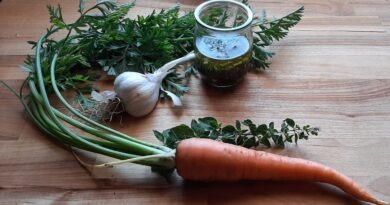
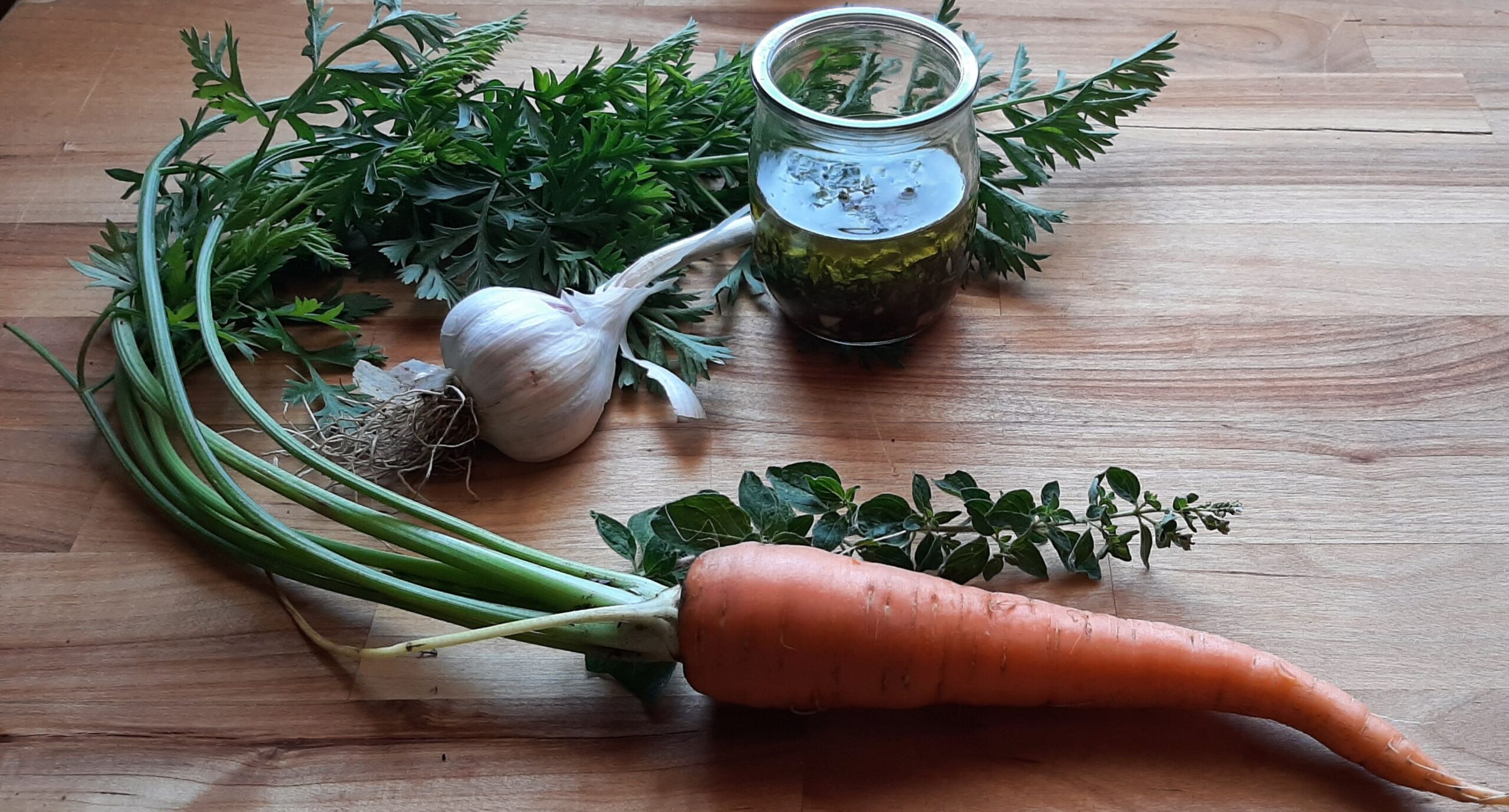
Carrot top chimichurri
Add this herb sauce to quinoa or rice dishes for a pop of flavour, or brush over grilled vegetables or roasted potatoes. Add a little extra olive oil and vinegar to turn it into a punchy salad dressing.
- One small bunch carrot tops
- 2-3 cloves garlic
- Handful parsley, minced
- Handful fresh or 1 tsp dried oregano
- 3-4 tbsp olive oil
- 2 tbsp red wine vinegar
- Salt and pepper to taste
Remove the feathery greens off of the carrot tops, and finely mince. Mince parsley, garlic and oregano, and add to small mason jar with carrot tops. Stir in olive oil and red wine vinegar. Add salt and pepper to taste, and shake. Store in a sealed jar in refrigerator for up to 5 days.
For a new healthy twist on pesto, add carrot tops to this pesto recipe for an extra nutritional boost.
Sari Huhtala is the creator, publisher and editor of Alive and Fit Magazine, which was created in 2007. She has over 25 years of experience in journalism and over 15 years of experience as a certified personal trainer and fitness instructor, and is a holistic chef, offering holistic cooking and edible wilds workshop, and My Farmacy workshops. She is an organic farmer, wild-crafter and grandmother, who has spent over 20 plus years navigating a holistic, healthy path for her family. Reach her at friends@thelaughingforest.ca