How the right fats fuel your body for energy, repair, resilience
By Dr. Nathalie Beauchamp, DC
The question “Is fat good or bad?” misses the point entirely. The right question is: which fats does your body need, and are you getting them in the right balance?
When people talk about “healthy fats,” the conversation usually revolves around saturated versus unsaturated fats, or omega-3s versus omega-6s. While those distinctions matter, they don’t fully explain why different fats behave so differently in your body.
The real answer lies in molecular structure—specifically, how long the fatty acid chain is, how many double bonds it contains, and where those double bonds are located. These structural details determine whether a fat becomes quick fuel, gets woven into your cell membranes, or acts as a biochemical messenger influencing inflammation and metabolism, and why you need variety when it comes to dietary fats.
Fatty acids 101
Bear with me as this next part will get a bit technical, but I promise it’s not going to be a full biochemistry lecture. Understanding how fats are built and used by the body helps to give you a clear picture on why their structure matters so much for your health.
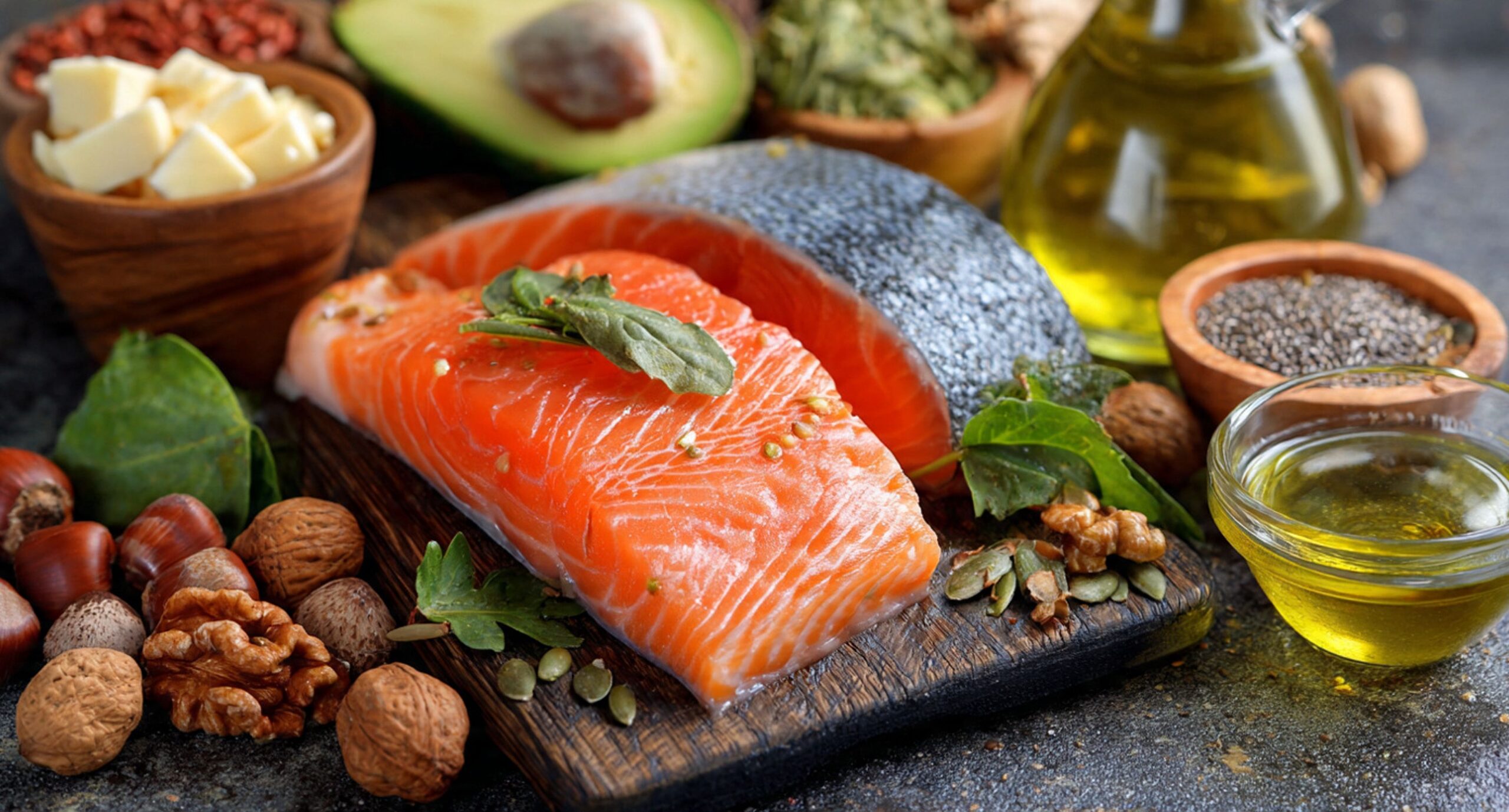
Every fat you eat — whether from salmon, avocado, nuts, olive oil, or butter — ultimately breaks down into fatty acids. These are the body’s universal language for fat metabolism, the molecular “words” your cells interpret to decide what to do next. Once ingested, they can be burned for instant energy, incorporated into tissues as structural materials, or used as biochemical messengers that influence everything from inflammation to gene expression.
In your body, fatty acids serve three essential functions:
- They provide energy. When your cells need fuel, they break down fatty acids to extract ATP — the energy currency your mitochondria produce. This powers everything from muscle contraction to brain activity, offering sustained fuel without the blood sugar spikes of carbohydrates.?
- They form the structure of cell membranes. Every cell is wrapped in a lipid bilayer — a double layer of fatty acids that controls what enters and exits. The types of fats you eat literally become part of your cells, influencing membrane fluidity, nutrient transport, and cellular resilience.
- They act as signaling molecules. Certain fatty acids regulate inflammation, immune responses, metabolism, and even gene expression. They’re not inert building materials — they’re biologically active, modulating hormones, eicosanoids (like prostaglandins), and pathways that affect heart health, mood, and recovery.
Each fatty acid follows a basic blueprint: a backbone of carbon atoms connected end-to-end, each bonded to hydrogen atoms like beads on a string. The subtleties of that design — how long the chain is and whether it contains double bonds (points of unsaturation) — completely change its behaviour.
To keep things simple, scientists describe this structure with a short code like C18:1. The first number tells you how many carbon atoms are in the chain (C18 means 18 carbons long), and the second number tells you how many double bonds it has (:1 means one double bond). So C16:0 (like palmitic acid in butter) is a 16:carbon saturated fat with no double bonds, while C18:1 (oleic acid in olive oil) is an 18:carbon fat with one double bond. You don’t need to memorize these, but seeing a few examples makes it easier to understand why different fats behave so differently in your body.
Some fatty acids are burned quickly as fuel. Others are incorporated into tissues and membranes, where they support long-term cellular resilience and communication. The difference lies largely in carbon chain length—the number of carbon atoms in the molecular chain.
Chain length acts like a molecular passport, deciding metabolic speed and destination:
- Shorter chains move freely in the bloodstream and head straight to the liver, where they’re converted into energy or used to support gut and immune function. (1) They influence how efficiently you produce ketones and even how well your colon cells regenerate.
- Longer chains take a slower route through the lymphatic system and are often built into cell membranes or reserved as metabolic storage. These provide long-lasting fuel stability — the kind that supports hormone balance, endurance, and steady energy instead of spikes and crashes.
Meanwhile, double bonds create subtle bends in the carbon chain, changing the molecule’s shape and flexibility. This influences how fats interact with your cells and how they affect inflammation.
- Fats with more double bonds (polyunsaturated fats) keep membranes fluid and responsive, supporting nutrient transport and cellular communication. Some, like omega-3s from fish, even regulate inflammatory signalling and neurotransmitter flow, which can improve focus, mood, and cardiovascular resilience.
- Fats without double bonds (saturated fats) create strength and stability in cell membranes and hormones. In balance with unsaturated types, they help maintain normal stress response and body temperature, and resist oxidative damage.
This molecular design might sound technical, but its effects can be felt throughout the body in how stable your energy levels are, how efficiently your body burns fat, how clear-headed you are, and even how well you recover from inflammation. A fatty acid’s chain length and flexibility are the driving forces behind your metabolism, immunity, and longevity.
In short, structure equals function. The length of the carbon chain decides how it’s transported and used, and double bonds decide its flexibility and function. Understanding that relationship turns the science of dietary fat into a practical blueprint for how to eat in a way that fuels, repairs, and regulates your body at every level. Let’s take a closer look at the different classifications of fatty acids.
Short-chain fatty acids: the gut-derived fats
Short-chain fatty acids are unique in that they don’t come from the fats you eat, rather they’re fats your gut bacteria produce when you feed them fibre. When fibre reaches your colon, beneficial bacteria ferment it and release these small, powerful molecules directly into your bloodstream and gut lining.
The three main SCFAs each serve distinct roles:
- Acetate (C2) fuels your muscles and helps regulate whole-body metabolism. It’s the most abundant SCFA and travels throughout your system, influencing energy balance and even appetite regulation. (2)
- Propionate (C3) heads to your liver, where it helps regulate blood sugar and supports metabolic pathways that determine how efficiently you store and burn fuel. (3)
- Butyrate (C4) is the primary energy source for your colon cells. It maintains gut barrier integrity, reduces intestinal inflammation, and even influences immune tolerance — the process that helps your body distinguish between harmless food proteins and actual threats. (4)
This is one of the clearest examples of how diet shapes metabolism indirectly. When your gut bacteria are well-fed, they produce SCFAs that nourish your intestinal lining, calm systemic inflammation, and support metabolic health from the inside out.
Medium-chain fatty acids: the fast-track energy source
Medium-chain fatty acids (MCFAs) — those with 6 to 12 carbons — occupy a unique metabolic space. Unlike longer fats that require extensive processing before your body can use them, medium-chain fats take a shortcut that makes them behave almost more like carbohydrates than traditional fats.
The most common medium-chain fatty acids are caproic acid (C6), caprylic acid (C8), capric acid (C10), and lauric acid (C12). Coconut oil is the richest whole-food source, containing roughly 60 per cent MCFAs, with smaller amounts found in palm kernel oil and full-fat dairy from grass-fed animals. (5)
What makes MCFAs special is how your body handles them. Most dietary fats get packaged into large molecules called chylomicrons and travel through your lymphatic system before slowly entering your bloodstream. Medium-chain fats skip that entire process. Because of their shorter length, they’re water-soluble enough to be absorbed directly from your intestines into your bloodstream, where they travel straight to your liver.
Once there, your liver rapidly converts them into energy. They don’t require carnitine, the transport molecule needed to shuttle longer fats into your mitochondria, so they can be burned almost immediately. This makes them a preferred fuel during fasting, low-carb diets, or any time your body needs quick, sustained energy without spiking blood sugar.
Medium-chain fats are also ketogenic, meaning your liver can convert them into ketones even if you’re not in full nutritional ketosis. Ketones are an alternative fuel source for your brain and muscles, and they provide steady energy without the crashes that come from glucose fluctuations.(6) This is why MCT oil has become popular among athletes, biohackers, and anyone looking for cognitive clarity without relying on constant carbohydrate intake.
Lauric acid (C12) sits at the boundary between medium and long-chain fats. It’s technically a medium-chain fatty acid, but it behaves more like a long-chain fat metabolically as it’s absorbed more slowly and provides structural benefits in addition to energy. Lauric acid also has antimicrobial properties, which is why coconut oil has been traditionally used for immune support and skin health.(7)
For most people, medium-chain fats are best used strategically — added to coffee for sustained morning energy, used during endurance exercise, or incorporated during periods of low carbohydrate intake when your body benefits from an easy-to-access fat fuel. They won’t replace the structural or anti-inflammatory roles of longer-chain fats, but they fill a specific niche: fast, clean-burning energy that doesn’t depend on insulin or blood sugar regulation.
Long-chain fatty acids: the structural fats from meat and oils
Long-chain fatty acids (typically between 13 and 21 carbons) make up the bulk of fats in meat, poultry, dairy, and many plant oils. These include palmitic acid (C16:0) from butter and meat, stearic acid (C18:0) from beef tallow and cocoa butter, and oleic acid (C18:1) from olive oil and animal fats.
Unlike medium-chain fats that rush to the liver for quick energy, long-chain fats take a slower route through your lymphatic system. They’re packaged into larger molecules and gradually released into circulation, where they serve as both fuel reserves and structural materials.
These fats form the foundation of your cell membranes, giving them the stability and integrity needed to protect cellular contents and regulate what passes in and out. They’re also the raw materials for steroid hormones like testosterone, estrogen, and cortisol — molecules that depend on a steady supply of dietary fat to maintain balance.
Beyond the common fatty acids, grass-fed and pasture-raised meats contain small but significant amounts of odd-chain fatty acids like pentadecanoic acid (C15:0) and heptadecanoic acid (C17:0). Emerging research suggests these rare fats may support metabolic health, improve insulin sensitivity, and help regulate inflammatory responses — benefits that don’t show up in grain-fed meat or most plant oils. (8)
Animal fats have been demonized for decades, but the science is more nuanced. When eaten as part of whole foods rather than processed into industrial shortenings or combined with refined carbohydrates, these long-chain fats provide stable energy, support cellular repair, and help your body produce the hormones that regulate stress, reproduction, and metabolism. They’re not quick fuel like MCTs; they’re the building blocks your body uses to maintain structure and function over the long term.
Very-long-chain fatty acids: the neural and anti-inflammatory specialists
Very-long-chain fatty acids (those with 20 to 22 carbons or more) are the most specialized category of dietary fats. While shorter fats prioritize energy or structural stability, very-long-chain fats excel at communication and regulation. They’re not primarily burned for fuel. Instead, they become integral components of cell membranes in your most metabolically active and sensitive tissues: your brain, eyes, heart, and immune system.
The most important very-long-chain fats are the omega-3s EPA (eicosapentaenoic acid, C20:5) and DHA (docosahexaenoic acid, C22:6), found almost exclusively in cold-water fatty fish, like salmon, mackerel, sardines, and anchovies. Small amounts exist in algae, which is where fish get their omega-3s in the first place, but fish concentrate these fats far more efficiently than plant sources.
DHA makes up roughly 40 per cent of the polyunsaturated fats in your brain and 60 per cent of the fats in your retina. (9) It’s not there for energy — it’s there because its long, highly flexible structure creates fluid, responsive membranes that allow neurons to communicate rapidly and efficiently. When your brain cells need to release neurotransmitters, adjust receptor sensitivity, or form new synaptic connections, DHA provides the molecular environment that makes it possible.
This is why DHA is critical during fetal development and early childhood, when the brain is growing fastest. It’s also why low DHA levels in adults are associated with cognitive decline, poor memory, mood disorders, and impaired visual function. (10) Your brain depends on it to maintain neuroplasticity, the ability to adapt and reorganize in response to learning and experience.
EPA, meanwhile, plays a more active role in regulating inflammation. While omega-6 fats produce eicosanoids that initiate inflammatory responses, EPA competes for the same enzymes and produces less inflammatory or actively anti-inflammatory compounds. It also serves as the precursor to specialized molecules that help your body complete the inflammatory process and return to baseline.
The combination of EPA and DHA supports cardiovascular health by improving endothelial function, reducing triglycerides, stabilizing heart rhythm, and lowering the risk of blood clots. They also influence gene expression, turning on pathways that improve insulin sensitivity, mitochondrial function, and cellular repair.
Your body can technically convert ALA (the plant-based omega-3 from flax, chia, and walnuts) into EPA and DHA, but the conversion rate is extremely low — often below five per cent for EPA and less than one per cent for DHA. (11) For most people, relying on plant sources alone doesn’t provide enough of these critical very-long-chain fats to support optimal brain and cardiovascular function.
When your brain feels clear, your mood is steadier, your joints recover faster, and your cardiovascular system runs smoothly, EPA and DHA are part of the reason why. These are fats for communication, regulation, and resilience at the cellular level.
What about omegas?
Now that we understand chain length, there’s one more structural detail that explains why unsaturated fats from different sources trigger entirely different biological responses: omega numbering.
The “omega” designation refers to where the first double bond is located, counting from the tail end of the fatty acid chain. Scientists call this the omega end because omega is the last letter of the Greek alphabet — it marks the endpoint of the molecule.
Here’s how it works:
- Omega-9: the first double bond is 9 carbons from the end. Oleic acid (C18:1 omega-9), the primary fat in olive oil, is the classic example.
- Omega-6: the first double bond is 6 carbons from the end. Linoleic acid (C18:2 omega-6), found in nuts, seeds, and most vegetable oils, is the most common dietary omega-6.
- Omega-3: the first double bond is 3 carbons from the end. This family includes ALA (C18:3) from plants, and the longer-chain EPA (C20:5) and DHA (C22:6) from fish.
So, a complete fatty acid description includes three pieces of information: length (number of carbons), degree of saturation (number of double bonds), and double bond position (omega family). When you see “C18:1 omega-9,” you’re looking at an 18-carbon chain with one double bond located 9 carbons from the tail.
This might seem confusing, but the position of that first double bond completely changes what your body does with the fat. The location determines the molecule’s three-dimensional shape, and that shape is what your enzymes recognize. Different shapes trigger different metabolic pathways, producing entirely different signaling compounds that regulate inflammation, immunity, and repair.
- Omega-6 fats, like linoleic acid from vegetable oils, nuts, and seeds, get converted into eicosanoids that support immune function and initiate inflammation when needed. This is a normal, protective response. Your body uses omega-6-derived compounds to respond to injury, fight infections, and signal cellular repair.
- Omega-3 fats, like EPA and DHA from fish, produce resolvins, protectins, and maresins, specialized molecules that actively resolve inflammation and repair tissue damage. Think of them as the off switch for inflammation, they tell your body when the job is done and it’s time to stand down, helping to prevent chronic low-grade inflammation from lingering.
- Omega-9 fats, like oleic acid from olive oil and avocados, provide structural stability in cell membranes with minimal inflammatory signaling. They’re metabolically neutral in terms of inflammation, which makes them ideal for everyday cooking and cell maintenance.
Both omega-6 and omega-3 fats are essential, meaning your body cannot synthesize them from other fats. You must get them from food. The problem is that our modern diets have distorted the balance of omega-6:omega-3 beyond what human physiology was designed to handle.
Traditional human diets maintained omega-6 to omega-3 ratios between roughly 1:1 and 4:1. Today, due to widespread reliance on refined oils in processed foods, most people consume ratios of 15:1 or higher. (12) When omega-6 intake dominates, those fats flood the pathways that initiate inflammation, while omega-3 resolution pathways struggle to keep up.
Over time, this low-level, chronic inflammation can contribute to cardiovascular disease, insulin resistance, joint pain, autoimmune flare-ups, and neurodegenerative decline.(13) The system designed to protect and repair you becomes perpetually activated, progressively weakening tissues over time. If you are curious about your own omega ratio, this simple at-home test gives you a clear picture of your omega levels and where you stand.
Why carbon chain length matters
Once you understand that fatty acids differ by chain length and omega family, the confusion around dietary fat starts to dissolve. Different fats aren’t interchangeable — they’re tools for different jobs:
- Coconut oil: quick energy for body and brain.
- Olive oil: metabolic support and membrane fluidity.
- Meat fats: structural and hormonal stability.
- Fish oil: neural protection and inflammation balance.
- Fibre (yes, fibre!): fuels gut bacteria, creating short-chain fats for gut resilience.
This is why the question “Is fat good or bad?” misses the point entirely. The right question is: which fats does your body need, and are you getting them in the right balance?
Fat isn’t just fuel. It’s structure, communication, and energy. The modern tendency to vilify or glorify entire categories of fat (saturated, unsaturated, animal, plant) ignores the biochemical reality that structure dictates function. Once you see fat through that lens, building a diet that supports energy, repair, and resilience becomes straightforward.
In short: eat a variety of whole-food fats from diverse sources, prioritize omega-3s from fish, support your gut bacteria with fibre, and stop treating fat like the enemy. Your cells will thank you. For more information about why fats are so crucial to overall health, you can read a previous blog post here.
Recap: How different fats behave in the body
Short-chain (C2–C4): produced by gut bacteria from fiber. Primary role: gut lining fuel, and immune regulation
Medium-chain (C6–C12): found in coconut oil, MCT oil. Primary role: rapid energy, ketone production
Long-chain (C13–C21): found in olive oil, meat, animal fats. Primary role: cell membranes, hormones
Very-long-chain (C20–C22): found in Fish oil (EPA & DHA). Primary role: brain, nerves, inflammation balance
Yours in health,
Dr. Nathalie
Dr. Nathalie Beauchamp, B.Sc., D.C., IFMCP is the author of the book—Hack Your Health Habits: Simple, Action-Driven, Natural Solutions For People On The Go, and the creator of several online health education programs. Dr. Nathalie’s mission is to educate, lead and empower people to take control of their health. She recently launched a new book https://smartcuts.life/
For health strategies and biohacking tips sign up for her newsletter at www.drnathaliebeauchamp.com
Photo credit: © Multimedia Designs via Canva.com