Homesteader: try this easy stir fry with homegrown bean sprouts in a DIY sprouter
By Sari Huhtala
I’ve been sprouting mung beans for about 15 years, adding them raw to salads, and only recently did I start sprouting them to have homegrown bean sprouts to add to stir-fry meals. This is a great alternative to the grocery store bean sprouts. Mung bean sprouts are the same thing, except, commercially the mung beans are often soaked in chlorine – a step you can completely bypass.
Some organic bean sprouts, sold at markets, have even been found to be sprayed with a chlorine-based product to prevent spoilage. Plus, the National Institutes of Health noted the chemical hormone 6-Benzylaminopurine is still illegally used in some commercial sprouting operations to increase bean sprout yield. It just makes sense to grow your own, not just because it only costs pennies a cup, but you can produce it without chemicals, and contamination.
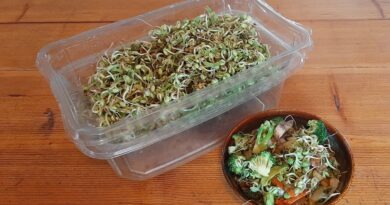
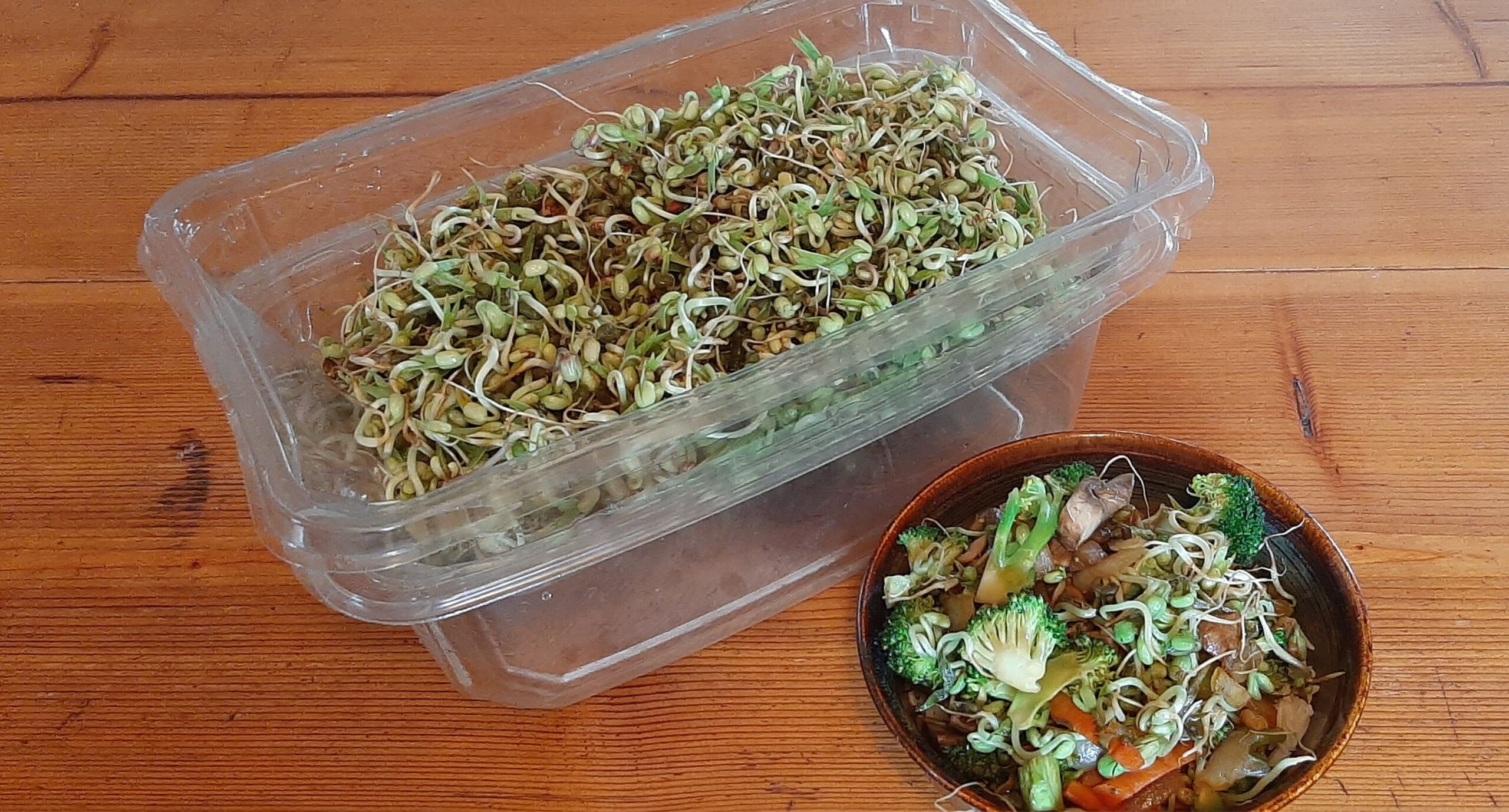
Being a homesteader, I look for no-cost ways to thrive, so, I created my own sprouter using two plastic salad bins.
Here’s how to grow your own bean sprouts:
- Poke holes in the bottom of a large plastic salad bin (I used a knife to quickly stab holes into it – be very careful not to stab your hand). I tried a small drill bit to make holes, but because of the type of plastic, that was a flop.
- Thoroughly wash and dry the bin with the holes.
- Pour about ¾ cup of dry mung beans (found in the dry bean section at the grocery store) into the bottom of the bin.
- Fill the bin with cold water about halfway, then place the bin on top of another large plastic bin, so that the bin with the mung beans sits on top (large salad bins sometimes have a slight size difference, which makes it easy to sit the other one on top).
- Allow the water to drain through the holes into the bottom bin. Drain the bottom bin and repeat the process once more. Allow the water to drain, to the bottom and dump the excess water.
- Place the sprouter on the counter, or by the window, or anywhere convenient. They do not need sunlight to grow, although, I find with sunlight they produce a larger amount of chlorophyll – which you will notice by the lush lime green colour, which signifies high energy production.
- Repeat the rinse and drain process twice a day. Morning and evening rinsing is a good practice. Keep repeating the process until the mung bean sprouts have grown to a desired length. Sprout them for 5-7 days for a higher yield.
- Once ready to harvest, empty the mung beans into a large bowl, and rinse multiple times, using a colander to strain the beans. I fill up the bowl with cold water, then dump it into the colander, at least five times to wash them fully before consuming.
- Once rinsed, allow them to sit in the colander for about an hour to drain excess water. To store for up to a week in the fridge, without spoilage, line a large bowl with a small clean tea towel, or cloth napkin (I use washable non-paper towels), and lift the sprouts onto the towel. Cover with a lid and refrigerate.
There you have it! Homemade bean sprouts made easy!
Basic bean sprout stir-fry
- 2-3 cups of bean sprouts
- Large carrot, cut into matchsticks
- 1 cup of mushrooms, chopped
- 1 large onion, chopped
- 1 cup broccoli flowerets/stems, chopped
- 1 cup cauliflower, chopped
- Red, green or yellow peppers, cut into strips
- Asparagus, chopped into 1-inch chunks
- Tamari sauce (or Braggs Liquid Soy)
- Avocado oil, coconut oil or olive oil for cooking
- Optional: add cloves of garlic and grated fresh ginger if desired
Note: Make the stir fry with any combination of vegetables. The ones in the ingredient list just offer ideas. I often make it simply with sprouts, onion, mushrooms and carrots if that’s all I have on hand.
In a frying pan or wok, add about 2-3 tbsp of healthy oil. Add more or less depending on how many vegetables you are including in your stir fry. Add all the vegetables, except the sprouts, and lightly stir fry to desired tenderness. Avoid over cooking. Add the sprouts and sprinkle tamari sauce over your vegetable mix, for flavour. Cover and fry just long enough to cook the sprouts – about 5 minutes.
Serve over a bed of rice.
Note: avoid using commercial grocery store soy sauce, which is made of unhealthy chemicals like caramel colour. Tamari is a delicious, gut-nourishing alternative.
Sari Huhtala is the creator, publisher and editor of Alive and Fit Magazine, which was created in 2007. She has over 25 years of experience in journalism and over 15 years of experience as a certified personal trainer and fitness instructor, and is a holistic chef, offering holistic cooking and edible wilds workshop, and My Farmacy workshops. She is an organic farmer, wild-crafter and grandmother, who has spent over 20 plus years navigating a holistic, healthy path for her family. Reach her at friends@thelaughingforest.ca